Author: Kayla Prokopakis, DO
Peer-reviewer: Mark Hopkins, MD
Editor: Alex Tomesch, MD
A 21 year-old college football player is involved in a head on collision on the field. He is unable to move his arms or legs and has decreased sensation throughout. He is rushed to the local ED and subsequently admitted with the advanced imagining shown below. Around 18 hours after the incident, movement of his extremities returns with some spasticity of the upper extremities.
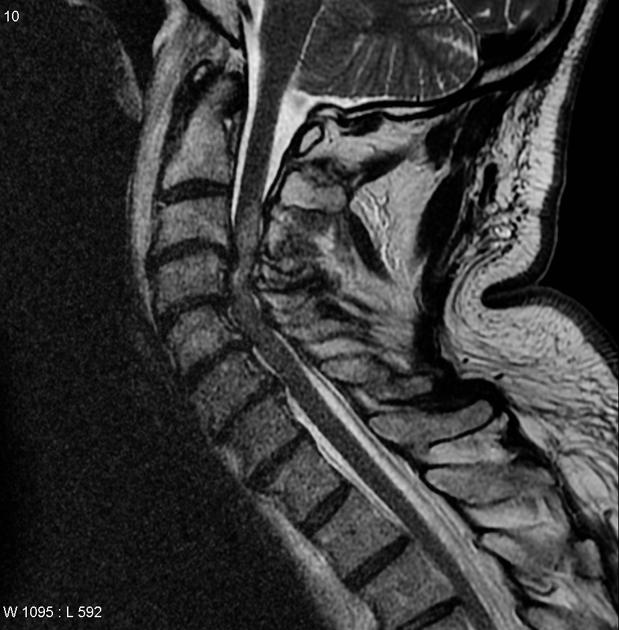
Image 1. Case courtesy of Dr Mahomed, Radiopaedia.org, rID: 23988
What is your diagnosis?
What physical exam findings are expected?
What is the expected time course?
What is the pathophysiology/etiology of this condition?
What is your initial management?
What is your diagnosis?
Spinal shock, which is a temporary loss of spinal cord function and reflexes below the level of injury.
PEARL: Spinal injuries can be classified as complete or incomplete. Complete injuries result in total loss of motor and sensation below the level of injury, while partial loss is defined as incomplete. Classifying the injury during spinal shock can initially be difficult as it can cause total loss below the injury, resembling complete spinal injury, despite the possibility of it being incomplete, as mentioned in the prompt. Because of this, classification of injury cannot be done until spinal shock has resolved [1,2].
What physical exam findings are expected?
Flaccid and areflexic paralysis as well as loss of sensation below the lesion. Bradycardia and hypotension can occur secondary to the loss of sympathetic tone [2,3].
What is the time course and how do you know when it is resolved?
Spinal shock can occur from onset of injury to up to 1-2 days. It tends to improve within 48 hours from injury and resolves completely in weeks or sometimes months [2]. As motor and sensation return, spasticity, hyperreflexia, and clonus can progress over days to weeks. The end of spinal shock is determined by the return of the bulbocavernosus reflex and/or plantar reflexes [2,3,4].
PEARL: The bulbocavernous reflex is anal sphincter contraction in response to squeezing the glans penis/clitoris or tugging on an indwelling foley.
What is the pathophysiology/etiology of this condition?
Much study and research has been performed on spinal shock but at this time, the entirety of its pathophysiology or etiology is not completely known. It is thought to be a result of neurons becoming hyperpolarized during the injury which then become unresponsive to brain stimuli [2,4,5].
What is your initial management?
A patient with a suspected spinal cord injury, including spinal shock, needs to be immobilized and placed in a c-collar. If injury occurs on the sideline, leave helmet and shoulder pads in place until removal with enough medical personnel can ensure spinal stability throughout, ideally at a trauma facility. ATLS should be initiated and followed [1,5].
PEARL: If the patient has respiratory depression and concurrent spinal trauma, suspect a high c-spine injury as nerves C3, C4, C5 innervate the diaphragm.
References
Stapczynski, JS, Tintinalli, JE. Spine Trauma. In Tintinalli's emergency medicine: A comprehensive study guide, 8th Edition. New York, NY: McGraw-Hill Education; 2016: 1717-1721.
Ditunno JF, Little JW, Tessler A, Burns AS. Spinal shock revisited: a four-phase model. Spinal Cord. 2004;42(7):383-395. doi:10.1038/sj.sc.3101603. PMID: 15037862.
Ko HY, Ditunno JF Jr, Graziani V, Little JW. The pattern of reflex recovery during spinal shock. Spinal Cord. 1999;37(6):402-409. doi:10.1038/sj.sc.3100840. PMID: 10432259.
D'Amico JM, Condliffe EG, Martins KJ, Bennett DJ, Gorassini MA. Recovery of neuronal and network excitability after spinal cord injury and implications for spasticity [published correction appears in Front Integr Neurosci. 2014;8:49]. Front Integr Neurosci. 2014;8:36. Published 2014 May 12.PMID: 24860447; PMCID: PMC4026713.
Ziu E, Mesfin FB. Spinal Shock. [Updated 2020 Nov 20]. In: StatPearls [Internet]. Treasure Island (FL): StatPearls Publishing; 2021 Jan-. Available from: https://www.ncbi.nlm.nih.gov/books/NBK448163/

Sign up here to receive our weekly cases
Want to write? Email us at orthoempearls@gmail.com
Instagram/Twitter: @orthoempearls

Comments
Post a Comment